Building a brain-computer interface to play Space Invaders
Six months of EEG, motor imagery and deep transfer learning.
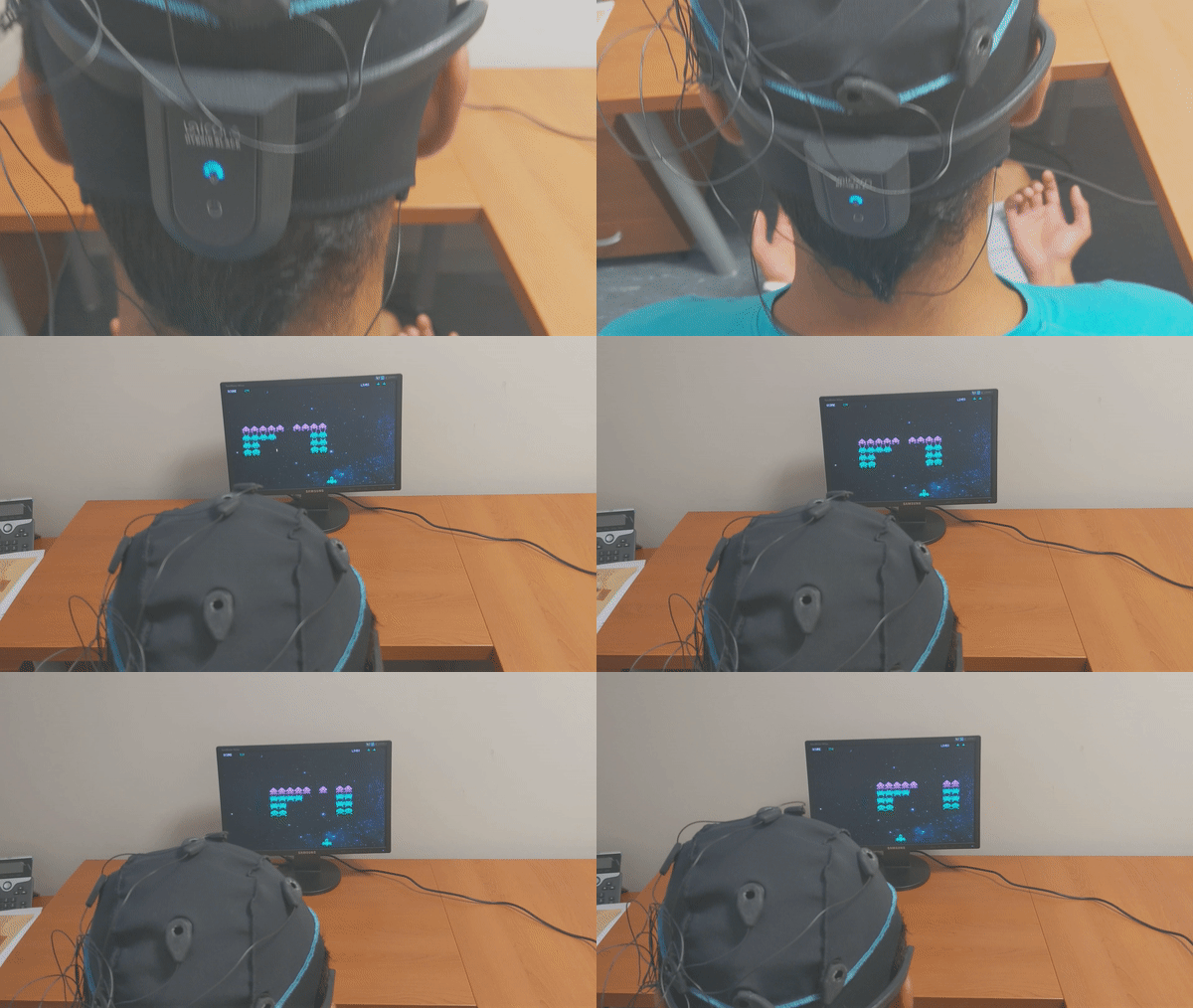
For my master's project at VU Amsterdam I spent six months building a brain-computer interface that lets someone play Space Invaders using motor imagery. The idea: paralyzed people can still imagine moving their limbs even when they physically cannot, and that imagined movement produces measurable brain signals. Capture those signals with EEG, classify them with a machine learning model, translate the prediction into game controls. A cheap, accessible BCI that works is a first step toward clinical rehabilitation.
The system used a g.tec Unicorn headset, an EEGNet deep learning architecture trained with transfer learning across multiple subjects, and a real-time Python pipeline. The article covers the full BCI pipeline: hardware selection, experiment design, pre-processing, feature extraction, and deep transfer learning, plus the practical challenges of EEG variability that make the gap between a lab demo and a clinical device wider than it looks. Published as two posts on Towards Data Science, September 2022.